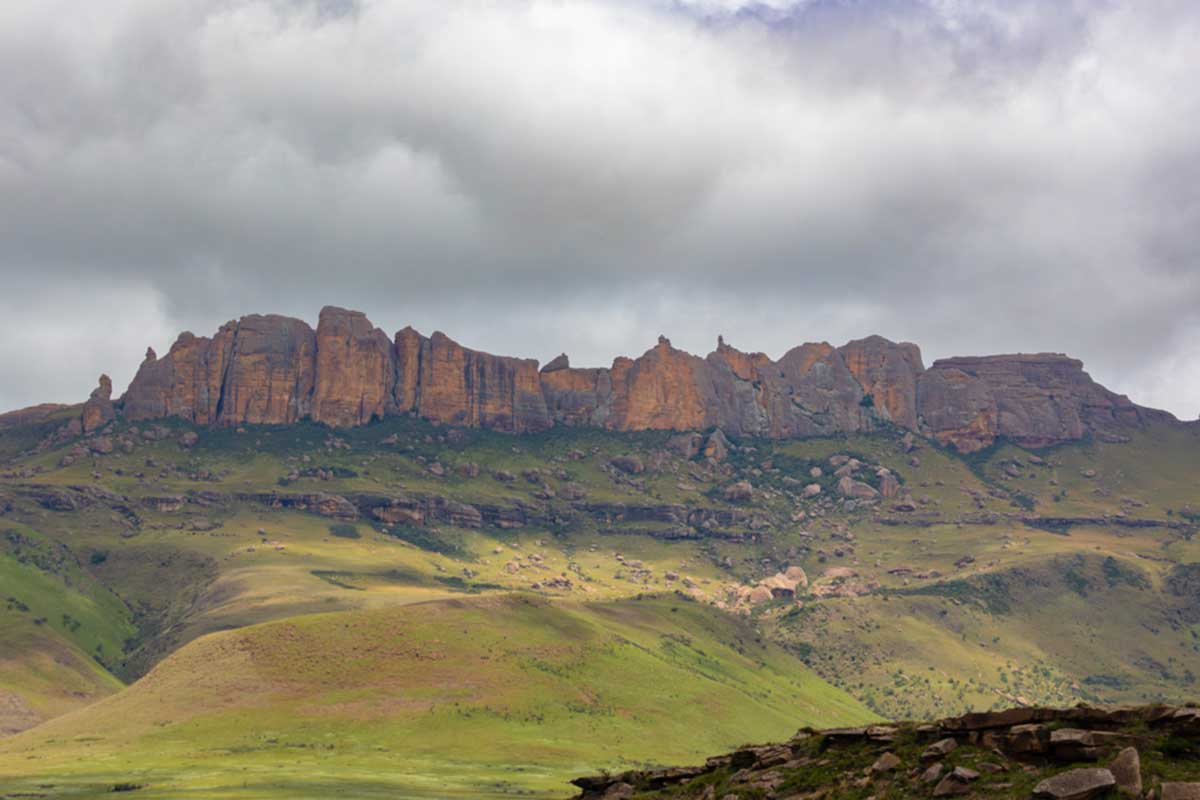
Featured image: Nqanqarhu-landmark. Credit: Angus-Burns.
South Africa has a new national park to protect grasslands vital for biodiversity and water security.
The Eastern Cape highlands have a new conservation champion. Minister of Forestry, Fisheries and the Environment David Maynier has declared the Grasslands National Park, covering approximately 10 226 hectares across 18 properties between Nqanqarhu and Rhodes.
The declaration, published in the Government Gazette on 9 October 2026, moves the project from a proposed protected area to a formally declared national park.
The park will help protect South Africa’s underrepresented grassland ecosystems and part of the Eastern Cape Drakensberg Strategic Water Source Area. These landscapes play an important role in biodiversity, water security and the livelihoods supported by the region’s working agricultural land.
Golden Gate Highlands National Park already protects important grassland habitats in the Free State, while parks such as Mountain Zebra include grasslands alongside other biomes. The new Grasslands National Park adds another dedicated conservation area to the mix, using biodiversity stewardship to bring privately owned agricultural land into the protected-area network.
This park is different from other national parks. The park was created primarily through biodiversity stewardship, so landowners did not have to give up their land. This means landowners retain ownership while committing to agreed conservation and management arrangements. Conservation-compatible agricultural activities may continue, allowing conservation and farming to work alongside one another.
According to Minister Maynier, this is the first national park in South Africa established primarily through a biodiversity stewardship model.
The Department of Forestry, Fisheries and the Environment and South African National Parks (SANParks) worked alongside WWF South Africa and other partners to bring the project to fruition. SANParks has been assigned responsibility for managing the new park.
The declaration marks an important step towards protecting one of South Africa’s least-protected biomes, while safeguarding part of a strategic water source landscape. It also demonstrates how partnerships with landowners can help expand conservation across working agricultural land.
Love stories like this one?
See more of our content under our latest posts. You can also join others like you by subscribing to our newsletter.
Copyright 2026 Never-ending Nature. All rights reserved. You may not republish or rewrite this article without permission.